How Ecommerce Brands Use AI to Turn Data Into Revenue

Learn how leading ecommerce brands use AI, behavioral analytics, customer conversations, and revenue data to uncover opportunities, improve customer experiences, and drive growth.
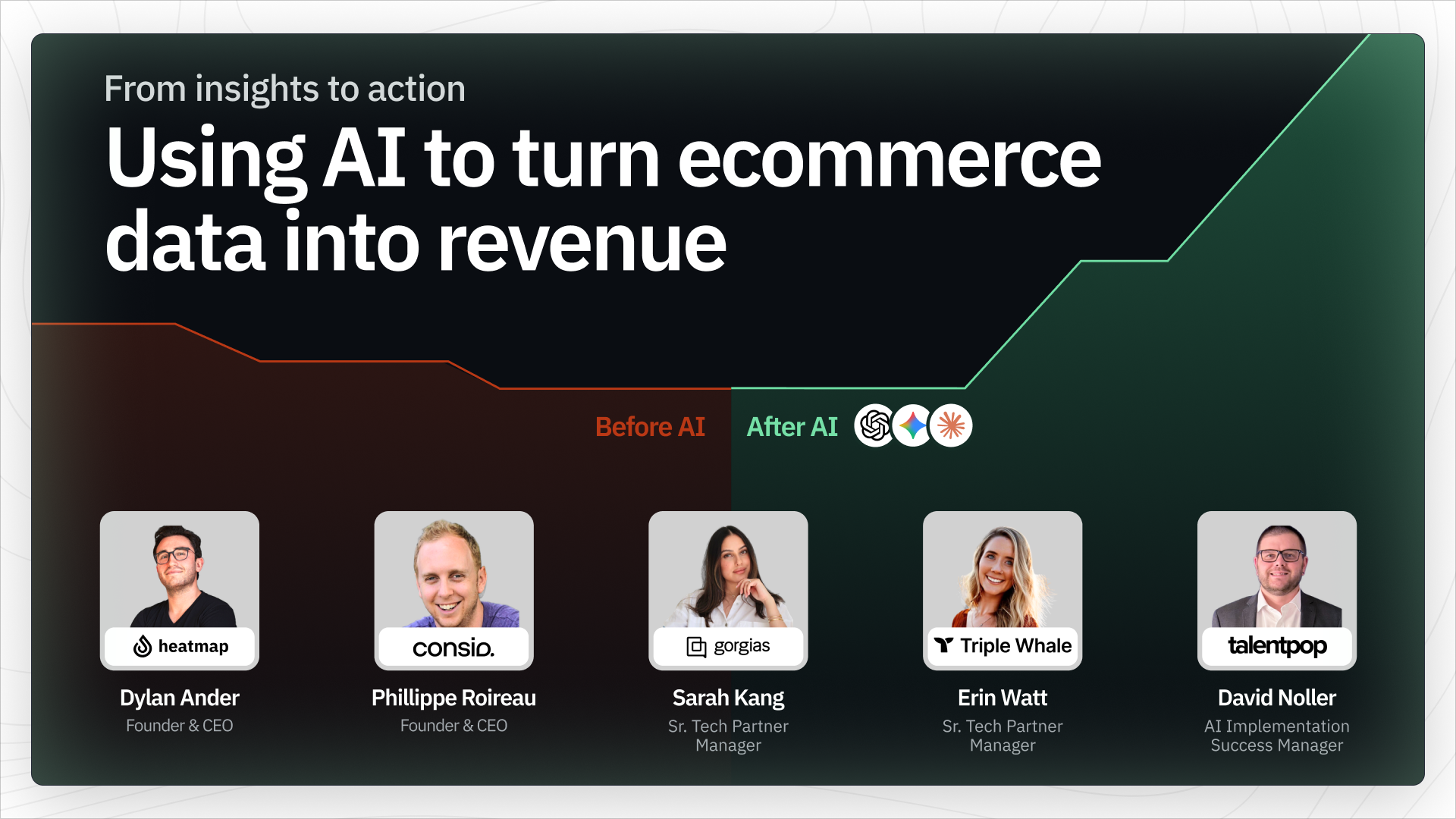
From Insight to Action: Using AI to Turn Ecommerce Data into Revenue
Overview
The From Insight to Action webinar brought together leaders from Heatmap, Triple Whale, Gorgias, TalentPop, and Consio to discuss how ecommerce brands can use AI, customer data, and behavioral insights to make faster decisions and drive revenue growth.
The conversation focused on a simple idea:
Most ecommerce brands have more data than ever before.
The challenge is turning that data into action.
From customer support and retention to behavioral analytics, AI workflows, and revenue optimization, the speakers shared practical examples of how leading ecommerce teams are using AI today to identify opportunities, improve customer experiences, and move faster.
Watch the replay:
Key Takeaways
AI Is Only as Valuable as the Data Behind It
Many ecommerce brands are experimenting with AI tools right now, but generic AI produces generic answers.
The biggest opportunity comes from connecting AI to real business data, including customer conversations, behavioral analytics, revenue data, and operational workflows.
The better the context, the better the recommendations.
Revenue Data Matters More Than Clicks
One of the recurring themes throughout the webinar was the importance of focusing on revenue outcomes instead of engagement metrics.
Clicks, pageviews, and add-to-carts can be useful signals, but they don't always tell you what is driving revenue.
Brands that optimize around revenue per session, purchase behavior, and customer intent are often able to uncover opportunities that traditional analytics miss.
Behavioral Analytics Helps Identify Hidden Revenue Leaks
Understanding where shoppers hesitate, get stuck, or lose momentum throughout the buying journey helps teams prioritize improvements with the highest revenue impact.
Rather than relying on assumptions, teams can use behavioral data to identify friction points and make more informed optimization decisions.
Customer Conversations Contain Valuable Insights
Support tickets, live chat conversations, reviews, and customer questions often reveal problems that analytics alone cannot.
Speakers highlighted how customer-facing teams can use AI to surface patterns, identify common objections, and uncover opportunities to improve both conversion and retention.
AI Should Accelerate Execution, Not Replace Decision Making
The most effective ecommerce teams are using AI to reduce the time between identifying a problem and taking action.
Whether analyzing customer feedback, prioritizing tests, identifying revenue opportunities, or answering business questions, AI works best when it helps teams move faster with confidence.
A Common Theme Across Every Presentation
While each speaker approached AI from a different angle, a common theme emerged throughout the webinar:
AI delivers the most value when it is connected to real customer and business data.
Whether analyzing customer conversations, behavioral analytics, support interactions, attribution data, or revenue performance, the goal is the same: helping teams make better decisions and act faster.
The ecommerce brands seeing the greatest results are not simply adopting AI tools. They are connecting AI to the systems and data sources that already power their business.
Heatmap: Connecting AI to Ecommerce Behavioral Data
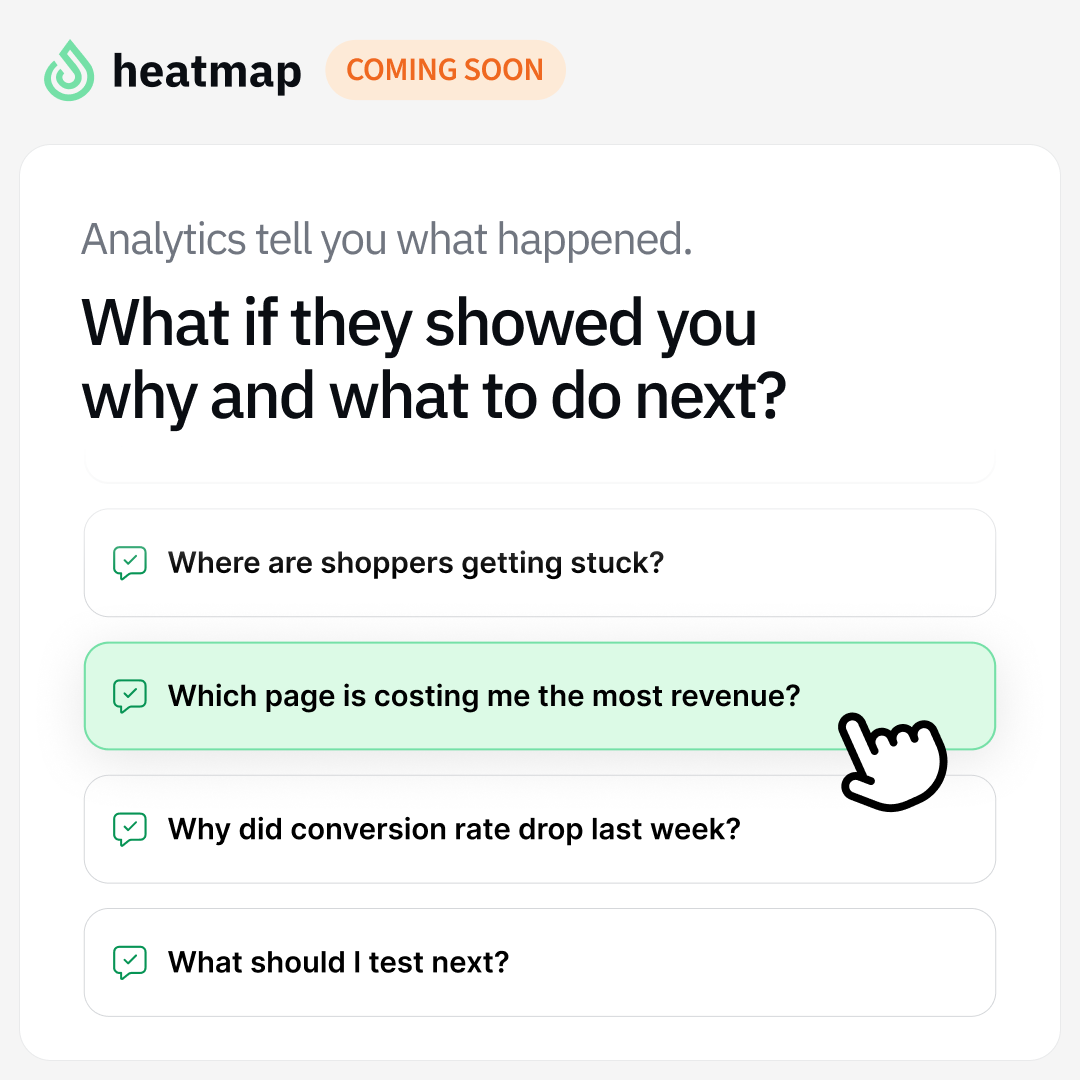
Heatmap introduced its MCP, allowing ecommerce brands and agencies to connect AI tools directly to Heatmap behavioral and revenue data.
Instead of digging through dashboards and reports, teams can ask questions such as:
- Why did conversion rate drop last week?
- Which pages are costing the most revenue?
- What should we test next?
- Where are shoppers getting stuck?
And receive answers backed by actual shopper behavior and revenue data.
Heatmap also demonstrated how AI can be used to identify patterns in shopper behavior, helping brands quickly uncover what is not working across the customer journey and prioritize the highest-impact optimization opportunities.
The goal is to help ecommerce brands move from insight to action faster while keeping recommendations grounded in real ecommerce performance.
Learn more:
https://www.heatmap.com/mcp
Gorgias: Using AI to Turn Customer Conversations Into Revenue Opportunities
Gorgias shared how support conversations have evolved from a cost center into one of the most valuable sources of customer insight available to ecommerce brands.
By using AI to analyze customer questions, objections, and purchase intent, brands can identify common friction points, improve customer experiences, and uncover opportunities to increase conversion and retention.
One example discussed during the session was how shoppers often abandon purchases not because they lack intent, but because they have unanswered questions. Questions about shipping, fit, product details, or policies can create enough uncertainty to stop a purchase. AI helps teams surface these recurring issues and address them before they impact revenue.
The session highlighted how customer support data often contains answers that traditional analytics cannot provide.
Learn more:
https://www.gorgias.com/
.gif)
Triple Whale: Making Better Decisions With Unified Ecommerce Data
Triple Whale discussed the importance of bringing ecommerce data together into a single source of truth.
As ecommerce brands continue to expand across channels, teams often struggle with fragmented reporting and disconnected insights.
The presentation focused on how unified data helps ecommerce teams understand performance more clearly, improve attribution, and make faster decisions with confidence.
A key takeaway was that when teams can access consistent revenue and performance data across channels, they spend less time reconciling reports and more time acting on opportunities.
Learn more:
https://www.triplewhale.com/
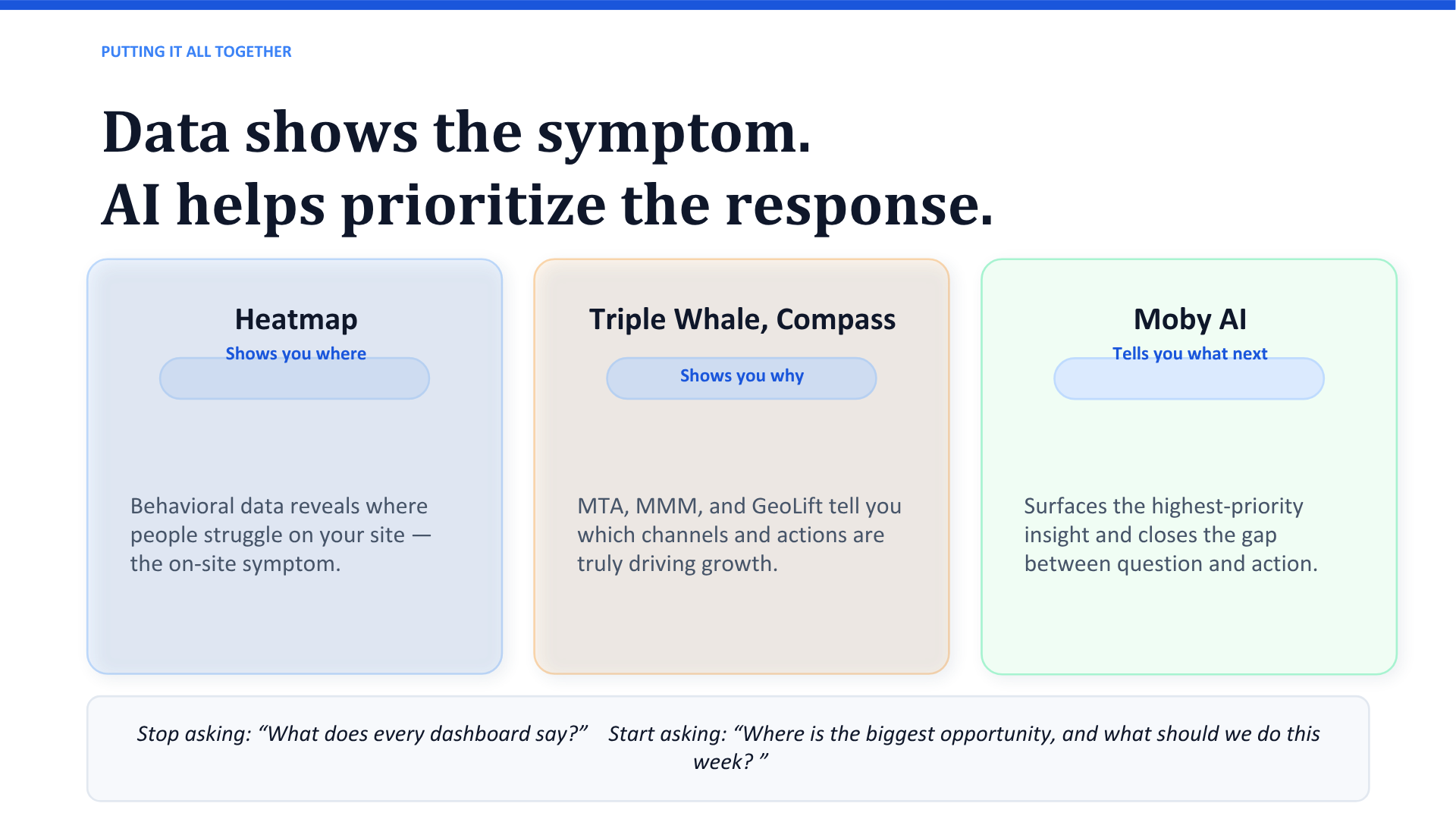
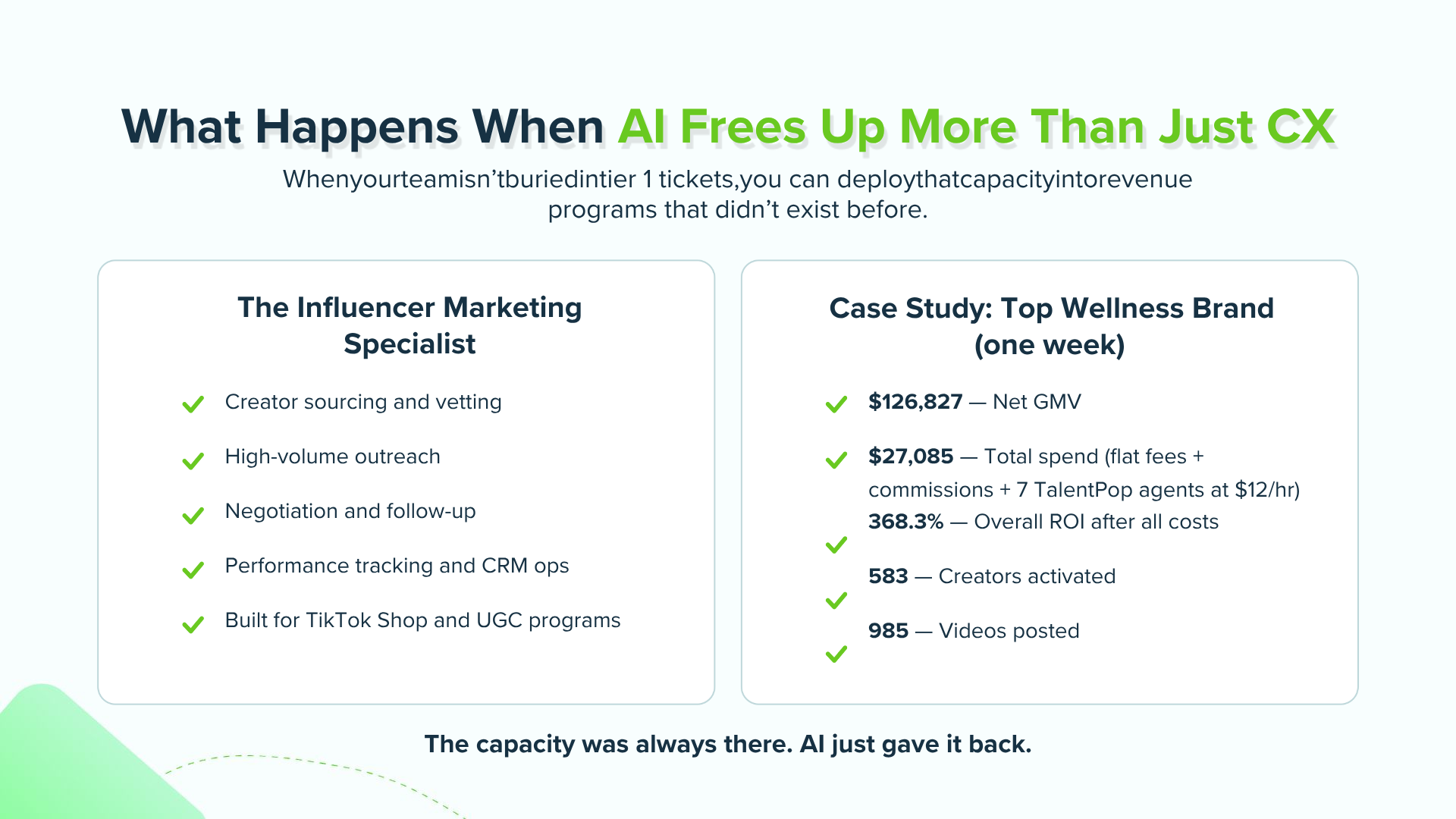
TalentPop: Scaling Customer Experience With AI and Human Support
TalentPop shared how leading ecommerce brands are combining AI with trained support teams to deliver better customer experiences at scale.
The discussion focused on balancing automation and human interaction, ensuring customers receive fast responses while maintaining the quality and personalization that drive loyalty and repeat purchases.
One example highlighted how AI can handle routine inquiries and repetitive tasks, allowing human support teams to focus on more complex conversations that require context, empathy, and relationship-building.
This combination helps brands improve efficiency without sacrificing customer experience.
Learn more:
https://www.talentpop.co/
Consio: Making Ecommerce Data More Accessible Through AI
Consio demonstrated how AI-powered assistants can help ecommerce brands interact with their business data more naturally.
Instead of manually building reports or navigating dashboards, teams can ask questions, explore performance trends, and access insights through conversational interfaces.
The presentation showed how making data easier to access allows teams across an organization, not just analysts, to find answers and make informed decisions faster.
The session reinforced a common theme throughout the webinar: reducing friction between questions and answers leads to faster action.
Learn more:
https://www.consio.ai/
Final Thoughts
The future of ecommerce isn't about collecting more data.
It's about making existing data more accessible, actionable, and useful.
The ecommerce brands winning right now are the ones quickly connecting customer behavior, operational data, and AI-powered decision making into a single workflow that drives action.
For teams looking to improve conversion rates, customer experience, and operational efficiency, the opportunity is no longer finding more information.
It's acting on it faster.
Want to uncover revenue opportunities faster?
Heatmap helps ecommerce brands understand shopper behavior through revenue-based heatmaps, journey analysis, session recordings, and AI-powered insights.
Book a demo → https://www.heatmap.com/book-demo
Learn more about Heatmap MCP → https://www.heatmap.com/mcp
How You Can Do It:
1: Download heatmap
2: Wait for 5k sessions
3: Reorganize products based on the highest revenue per session from top left to bottom right.


You made it all the way down here?
Might as well give us a shot, right? It'll change the way you approach CRO. We promise. In fact, our friend Nate over at Original Grain used element-level revenue data from heatmap to identify high-impact areas of his website to test, resulting in a 17% lift in Revenue per Session while scaling site traffic by 43%. Be like Nate. Try heatmap today.
